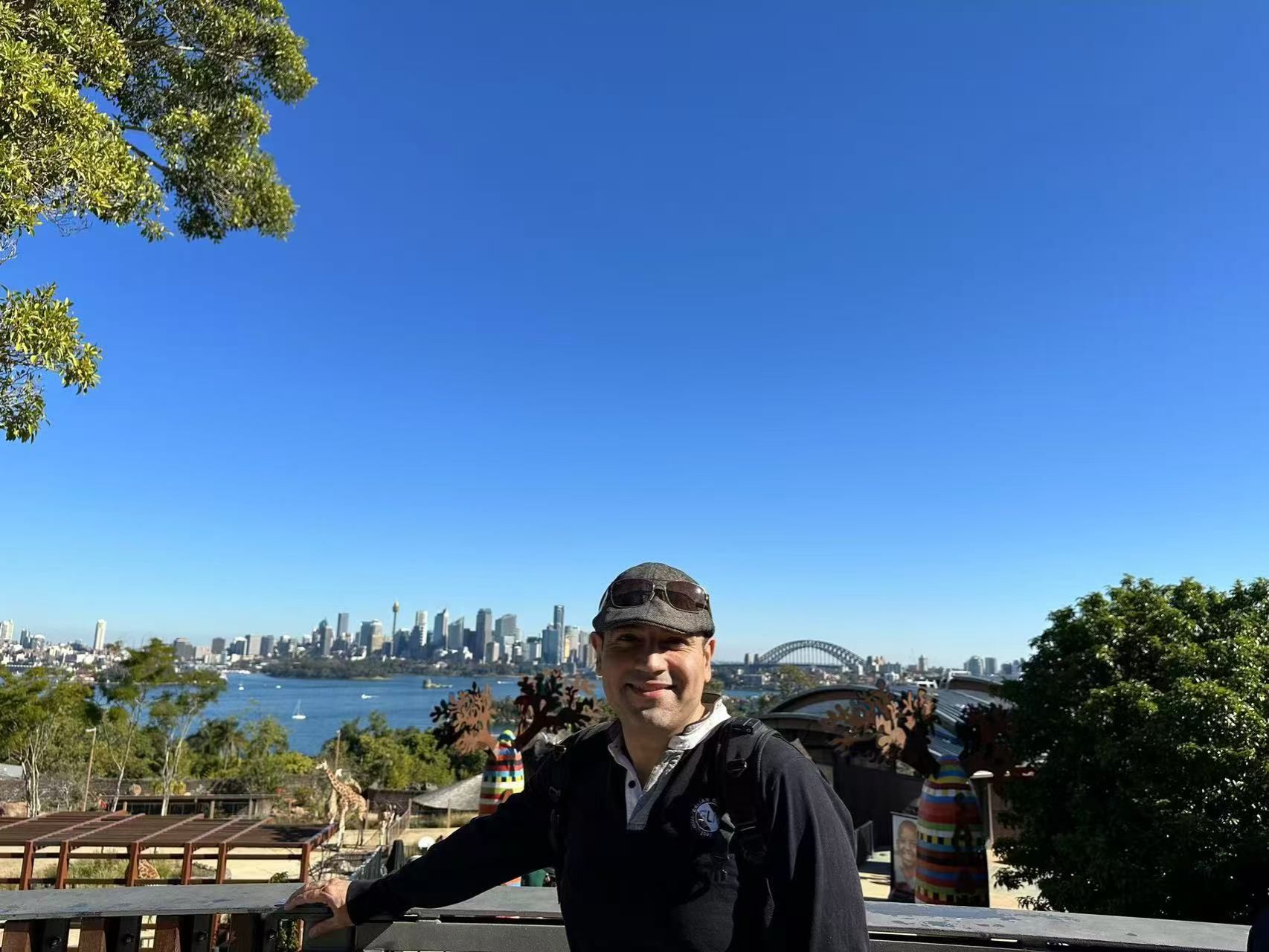
Profile
Hamed Karimian is an Associate Professor and Master's Supervisor at Jiangsu Ocean University. He develops GeoAI and deep learning-driven, data-intensive approaches that combine satellite remote sensing and geospatial big data to understand how environmental and urban systems change across space and time. His group builds high-resolution mapping and forecasting tools for real-world challenges including air pollution, water pollution, and urban mining, turning complex data into practical decisions.
Email: hamedk@jou.edu.cn
Methods and Data (Expertise)
Satellite remote sensing for environmental monitoring
GeoAI and deep learning for spatiotemporal modeling, prediction, and object detection/recognition in geospatial imagery
Geospatial big data integration and analysis for decision-ready products
Supervision Focus (for Master's Students)
Master's students in my group will typically work on hands-on, publishable projects that combine real datasets with modern GeoAI/deep learning methods, aiming for outcomes that are both scientifically rigorous and useful in practice.
Research Interests
GeoAI and deep learning for remote sensing and GIS
Air pollution spatiotemporal mapping and exposure assessment
Water pollution monitoring (water quality, algal/cyanobacterial blooms)
Object detection/segmentation in satellite and UAV imagery
Remote sensing data imputation and spatiotemporal gap-filling
Urban mining and circular-economy analytics using geospatial big data
Achievements and Highlights
Distinctions and support: NSFC project member (No. 42261071, 2023-2026); Jiangxi start-up young talent grant (No. 205200100418, 2019-2022); Peking University Post-PhD grant (2017-2019); Chinese Government Scholarship for PhD at Peking University (2011-2016).
Position: Associate Professor, Jiangsu Ocean University (Dec 2022-present). (Previous: PKU postdoc.)
Teaching (English-taught): Remote sensing image processing, hyperspectral remote sensing, machine learning for data science, scientific writing, and related courses.
Academic service (selected) — editorial board/reviewer: Health Economics and Management Review; Applied Energy; Renewable and Sustainable Energy Reviews; Science of the Total Environment; Journal of Cleaner Production; Journal of Hazardous Materials; Water Research; Atmospheric Environment; Environmental Research; International Journal of Digital Earth; and others.
Selected Publications (High-Level SCI Journals) — Selected from 38 peer-reviewed publications
1. Haochen Wang, Juan Shi*, Hamed Karimian*, Fei Wang, et al. CitrusNet: A vision transformer-CNN approach for citrus detection from multi-source imagery with multi-scale feature integration. Computers and Electronics in Agriculture, 241, 111260 (2026).
2. Yang Tao, Hamed Karimian*, Juan Shi*, Haochen Wang, et al. MobileYOLO-Cyano: An enhanced deep learning approach for precise classification of cyanobacterial genera in water quality monitoring. Water Research, 285, 124081 (2025).
3. Haochen Wang, Juan Shi*, Hamed Karimian*, Fucheng Liu, Fei Wang. YOLOSAR-Lite: A lightweight framework for real-time ship detection in SAR imagery. International Journal of Digital Earth, 17, 2405525 (2024).
4. Hamed Karimian, Yaqian Li, Youliang Chen, Shuwei Fang, Wenmin Zou. Evaluation of different machine learning approaches and aerosol optical depth in PM2.5 prediction. Environmental Research, 216 (2023).
5. Youliang Chen, Hongchong Li, Hamed Karimian*, Meimei Li, Qin Fan, Zhigang Xu. Spatio-temporal variation of ozone pollution risk and its influencing factors in China based on geospatial models. Chemosphere, 302, 134843 (2022).
6. Yanlin Qi, Qi Li, Hamed Karimian, Di Liu. A hybrid model for spatiotemporal forecasting of PM2.5 based on graph convolutional neural network and long short-term memory. Science of the Total Environment, 664, 1-10 (2019).
*Corresponding author as indicated in publications list.
Open Master's Topics / Projects
Hourly high-resolution air pollution mapping with GeoAI: Build spatiotemporal models that fuse multi-source environmental signals to generate high-resolution air pollution surfaces for exposure, health, and policy support.
Remote sensing gap-filling / imputation for missing data: Develop robust imputation and reconstruction methods to recover missing observations (e.g., cloud contamination, sensor gaps), improving the continuity and reliability of environmental remote-sensing products.
GeoAI object detection in optical/SAR/UAV imagery: Design and train deep learning detectors to identify targets of interest in geospatial imagery, with a focus on accuracy, generalization across regions, and efficient deployment.
Water quality monitoring and early warning: Create mapping and early-warning pipelines for water quality indicators using GeoAI and multi-source data, supporting monitoring and management of lakes and reservoirs.
Urban mining and circular-economy analytics (e-waste/resources): Quantify and map urban resource stocks and waste streams using geospatial big data, identifying hotspots and supporting evidence-based circular-economy planning.
High-resolution environmental risk mapping for cities: Build decision-ready risk maps by integrating environmental, urban, and socioeconomic layers, targeting practical tools for sustainable city management and public health protection.
Prospective Master's Students (How to Apply)
If you are interested in joining my group as a Master's student, please email hamedk@jou.edu.cn with:
Your CV
Your academic transcript


